This is a useful video for advanced students in Primary Education stage. You can visit different cities around the world, some of them from speaking English countries. Your students have also the opportunity to check and improve their listening comprehension. Come on, let's watch it!
Tuesday, 19 April 2016
Monday, 18 April 2016
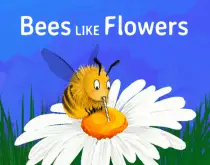
Into Books: Bees like Flowers
Bees like Flowers is another books for kids. This is recommended for Pre-School stage. I have used it in my lessons and I spent 4 sessions in reading and summarize the key vocabulary.
KEY WORDS: flowers, bees, stinger, tree, yellow, honey, queen.
STRUCTURE: I like ...
KEY WORDS: flowers, bees, stinger, tree, yellow, honey, queen.
STRUCTURE: I like ...
 |

Sunday, 17 April 2016
Saxon Genitive
Possession in addition to being expressed with the verb 'have' (or 'have got') and possessive adjectives (my, your, his, her, its, our, your and their) is expressed by special construction which in English is called 'Genitive Saxon'. In Spanish it is equivalent to the structure with the preposition 'de' (of).
Let's consider the following example:
REMEMBER: The apostrophe + s is added to singular nouns and just the apostrophe to plural nouns
This structure is used with people and animals, though it can also be used with places, organizations and companies.
Otherwise, if the possessor is not a person, the Saxon Genitive is not used.
To sump up, let's take a look at this Summary Grammar chart

Let's consider the following example:
Ex: The child's book / Juan's bookAS seen , in english, first we put the possessor followed by the apostrophe ' and 's', when the possessor is in singular. When the possessor is plural, just the apostrophe. After this the thing possessed.
Ex: The student's new pencil / Mary's brother
My parents' house.
(Refers to the house that my parents have.)
REMEMBER: The apostrophe + s is added to singular nouns and just the apostrophe to plural nouns
This structure is used with people and animals, though it can also be used with places, organizations and companies.
Otherwise, if the possessor is not a person, the Saxon Genitive is not used.
Ex: The legs of the table -NOT-The table's legs
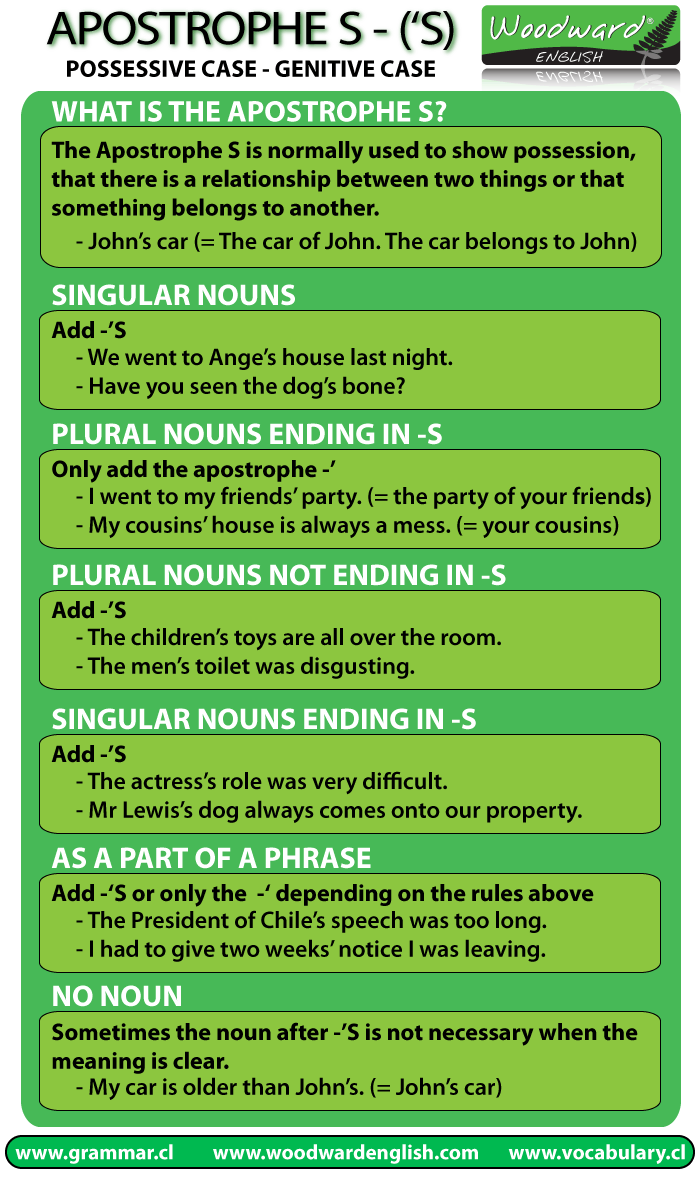
To sump up, let's take a look at this Summary Grammar chart
Saturday, 16 April 2016
What time is it?
Now, you have a simple way to learn the time in English. Are you ready? Come on!!


Make your own and … practice and practice!!!
ENGLISH SPEAKING COUNTRIES AROUND THE WORLD
Here you are a map of the Speaking English countries around the world.


ENCONTRADO EN: google.com/images
Subscribe to:
Posts (Atom)