Tuesday, 16 January 2024
Past Simple.REGULAR vs. IRREGULAR VERBS


Wednesday, 26 July 2023
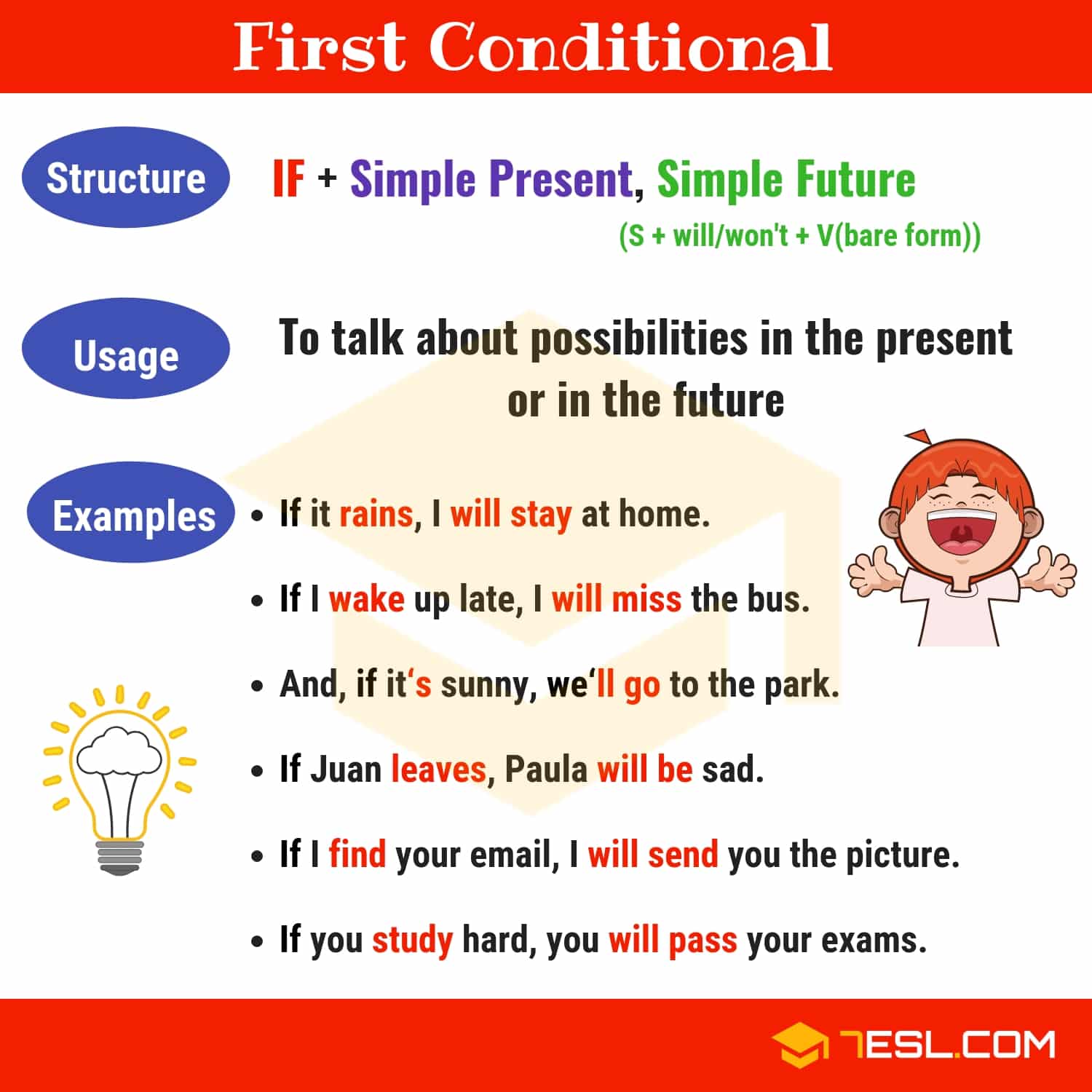
CONDITIONALS. FIRST CONDITIONAL
Tuesday, 25 July 2023
CONDITIONALS. TYPE ZERO


Thursday, 4 November 2021
ADVERBS OF FREQUENCY
Los adverbios de frecuencia son palabras que utilizamos para expresar con qué frecuencia realizamos nuestras acciones, o alguien más las realiza.
Activity #1
Mira atentamente el video y repite varias veces las oraciones para mejorar tu pronunciación:
Activity #2
Dibuja la pirámide en tu cuaderno. Escribe las oraciones y traducelas:

Activity #3
Hazte estas preguntas y respondelas para ti mismo de manera oral. Utiliza los adverbios de frecuencia:
- What do you usually do on mondays? I usually…
- What do you sometimes do on wednesdays?
- What do you never do on fridays?
- What do you seldom do on sundays?
- What time do you usually eat lunch?
- What time do you usually eat dinner?
- What time do you usually eat breakfast?
- How often do you eat fast food?
- How often do you go to the dentist?
- How often do you watch movies?
- How often do you exercise?
Activity #4
Mira el siguiente video a partir del minuto 53. Escucha muy bien lo que te cuenta Martha y relaciónalo en español. Luego, comienza a ver el video desde el principio repitiendo lo que Martha dice. Recuerda cada vez, mejorar tu pronunciación y darte cuenta de lo que dices en ingles.
Activity #5
Corrige las siguientes oraciones en tu cuaderno de acuerdo con el video anterior:
- I seldom get up at 6 o´clock: ________________________________
- I never have breakfast: ______________________________________
- I occasionally ride my bicycle: ______________________________
- I always watch television: __________________________________
 Activity #6
Da clic en el siguiente enlace y juega hangman:
Adverbs of Frequency Hangman Spelling Game for ESL, EFL Practice
Activity #7
Escribe en tu cuaderno y desarrolla:

Activity #8
Escucha el siguiente audio y completa el cuadro escribiendo una X donde corresponda:

Activity #9
Escribe las oraciones y desarrolla el ejercicio de acuerdo con las imágenes y los adverbios de frecuencia:

Monday, 25 October 2021
Halloween Quiz
liveworksheets.com
Sunday, 30 May 2021
Saturday, 29 May 2021
Thursday, 27 May 2021
Tuesday, 25 May 2021
Monday, 24 May 2021
Friday, 26 February 2021
Pronunciation -ed in past form
Hi everybody! Have you problems in how to pronounce the ending in regular verbs? Take a look at this chart and follow the examples.

Tuesday, 2 February 2021
PRESENT SIMPLE TENSE
PRESENT SIMPLE TENSE
(Source: https://www.grammar.cl/Present/Simple.htm)
The simple present tense in English is used to describe an action that is regular, true or normal.
We use the present tense:
1. For repeated or regular actions in the present time period.
- I take the train to the office.
- The train to Berlin leaves every hour.
- John sleeps eight hours every night during the week.
2. For facts.
- The President of The USA lives in The White House.
- A dog has four legs.
- We come from Switzerland.
3. For habits.
- I get up early every day.
- Carol brushes her teeth twice a day.
- They travel to their country house every weekend.
4. For things that are always / generally true.
- It rains a lot in winter.
- The Queen of England lives in Buckingham Palace.
- They speak English at work.
Verb Conjugation & Spelling
We form the present tense using the base form of the infinitive (without the TO).
In general, in the third person we add 'S' in the third person.
| Subject | Verb | The Rest of the sentence |
|---|---|---|
| I / you / we / they | speak / learn | English at home |
| he / she / it | speaks / learns | English at home |
The spelling for the verb in the third person differs depending on the ending of that verb:
1. For verbs that end in -O, -CH, -SH, -SS, -X, or -Z we add -ES in the third person.
- go – goes
- catch – catches
- wash – washes
- kiss – kisses
- fix – fixes
- buzz – buzzes
2. For verbs that end in a consonant + Y, we remove the Y and add -IES.
- marry – marries
- study – studies
- carry – carries
- worry – worries
NOTE: For verbs that end in a vowel + Y, we just add -S.
- play – plays
- enjoy – enjoys
- say – says
Negative Sentences in the Simple Present Tense
To make a negative sentence in English we normally use Don't or Doesn't with all verbs EXCEPT To Be and Modal verbs (can, might, should etc.).
- Affirmative: You speak French.
Negative: You don't speak French.
You will see that we add don't between the subject and the verb. We use Don't when the subject is I, you, we or they.
- Affirmative: He speaks German.
Negative: He doesn't speak German.
When the subject is he, she or it, we add doesn't between the subject and the verb to make a negative sentence. Notice that the letter S at the end of the verb in the affirmative sentence (because it is in third person) disappears in the negative sentence. We will see the reason why below.
Negative Contractions
Don't = Do not
Doesn't = Does not
I don't like meat = I do not like meat.
There is no difference in meaning though we normally use contractions in spoken English.
Word Order of Negative Sentences
The following is the word order to construct a basic negative sentence in English in the Present Tense using Don't or Doesn't.
| Subject | don't/doesn't | Verb* | The Rest of the sentence |
|---|---|---|---|
| I / you / we / they | don't | have / buy eat / like etc. | cereal for breakfast |
| he / she / it | doesn't |
* Verb: The verb that goes here is the base form of the infinitive = The infinitive without TO before the verb. Instead of the infinitive To have it is just the have part.
Remember that the infinitive is the verb before it is conjugated (changed) and it begins with TO. For example: to have, to eat, to go, to live, to speak etc.
Examples of Negative Sentences with Don't and Doesn't:
- You don't speak Arabic.
- John doesn't speak Italian.
- We don't have time for a rest.
- It doesn't move.
- They don't want to go to the party.
- She doesn't like fish.
Common time expressions used with the present simple tense are:
always, often, generally, normally, usually, sometimes, never …
every day, every week, every year…
(note the time word is in single form, day, not days.)
once a day, twice a week, three times a month…
(then the rest are four times, five times etc. then A and the time period, a month, a year, a century)
in the morning, in the afternoon, in the evening, at night
(we don’t say in the night)
on Mondays, on Fridays…
(when the day is in plural it refers to all Mondays, all Fridays)
Wednesday, 25 September 2019
Monday, 24 September 2018
The United Kingdom

Sunday, 24 September 2017

Friday, 22 September 2017
5 Useful Expressions
Thursday, 21 September 2017
Play with vocabulary. The Family
NOW PRACTICE AGAIN:

Thursday, 10 August 2017
If you travel by plane ... Look at this ...
AT THE AIRPORT


Tuesday, 1 August 2017
Holidays
Abroad
|
To the seaside
|
To the mountains
|
To the country
|
Camping
|
On a walking holiday
|
On a sightseeing holiday
|
On a package holiday
|
Suntan
|
Beach umbrella
|
Passport
|
Traveller’s cheques,currency
|
Your luggage
|
A camera
|
A map
|
A phrasebook
|
Put your feet up
|
Do some sunbathing
|
Get sunburnt
|
Try the local food
|
Go out at night
|
Dive
|
Sailing
|
Windsurfing
|
Waterskiing
|
Scuba diving
|
Rock-climbing
|
Rafting
|
Snorkelling
|
Kayaking
|
Horse-riding
|
Pony-trekking
|
Other extended vocabulary and expressions on holidays:
- all-in package/package holiday: a holiday where you purchase the travel and accommodation together
- breathtaking view: an extremely beautiful view
- charter-flight: a cheaper form of flying than a scheduled flight
- check-in desk: the place at the airport where you register for your flight and deposit your luggage
- departure lounge: where you wait for your flight to be called
- far-off destination: somewhere a long way away
- to get away from it all: to take a holiday to escape a busy or stressful lifestyle
- guided tour: an organised group shown around a place of interest by an expert
- holiday brochure: a glossy publication with details of holiday packages
- holiday destination: where you go for a holiday
- holiday of a lifetime: a special holiday that you are unlikely to repeat
- holiday resort: a place where lots of people go for a holiday
- hordes of tourists: crowds of tourists
- local crafts: objects produced locally
- long weekend: an extended weekend holiday including Friday or Monday
- out of season: outside of the main holiday period
- picturesque village: very pretty village
- passport control: the place where your passport is checked
- places of interest: sites of interest to tourists
- wildlife safari: a holiday, often in Africa, to observe wild animals
- self-catering: a holiday where you supply your own food
- short break: a short holiday
- to go sightseeing: to look around the tourist sites
- stunning landscape: extremely beautiful countryside
- travel agent: a shop that specialises in booking holidays
- tourist trap: somewhere where too many tourists go
- youth hostel: a cheap form of accommodation